On September 26, 2009, the first installment of the DFW rock lottery (last year's Zanzibar-organized event in Denton notwithstanding) took place at the Phoenix Project in Dallas, organized by Aaron Gonzalez (Akkolyte, Yells at Eels, Age of Disinformation). 17 musicians showed up ready to play (mostly by invite), and 4 groupings were drawn, one at a time, mere minutes before the sets were to happen.
The results made for a memorable and exciting evening. Below are the groupings, including Zanzibar Snails Michael Chamy and Nevada Hill, regular contributor Sarah Alexander, and part-time contributors Mike Maxwell and Mark Church (also of the Watchers)
The music is available for download here.
Ensemble 1
Mark Church-electronics, toys, samples
Aaron Gonzalez-bass, vocals
Stephen Lucas-keyboard
Kenny Withrow-guitar, electronics
Ensemble 2
Sarah Alexander-vocals, percussion, electronics
Richard Blake-bass guitar
Kim Corbet-vocals, keyboards, electronics, percussion
Brandon Young-drums, percussion, electronics
Ensemble 3
Gerard Bendiks-drums, percussion
Nevada Hill-violin, electronics
Mike Maxwell-electronics, harmonica, vocals
Lewis Sutton-tenor sax
Ensemble 4
Phil Brewer-trumpet
Nick Cabrera-clarinet, percussion, electronics
Michael Chamy-keyboards, electronics
Stefan Gonzalez-drums
Jim Lenhart-soprano and tenor sax
Showing posts with label Aaron Gonzalez. Show all posts
Showing posts with label Aaron Gonzalez. Show all posts
Sunday, November 1, 2009


Friday, September 18, 2009
AGE OF DISINFORMATION

Age of Disinformation
Age of Disinformation
(Mayyrh) MYH08
Age of Disinformation is a lucid nightmare supergroup featuring members of Dallas/Denton/Ft. Worth area ensembles Great Tyrant, Zanzibar Snails, Yells at Eels, Tidbits, SUBkommander & Aphonic Curtains. At midnight on May 23, 2008, surrealist impresario Aaron Gonzalez assembled a 6-piece ambient group called Age of Disinformation, billing the event in advance as “an improvisation on the current state of psychological and spiritual breakdown as it relates to viral ecosystems of economies of information.”
Those were the only instructions the incoming players received. The end result: a 47-minute cloud of transmogrifying cadmium clouds with mercury lining, mutated voices meshing with dark electronic scree tempered by beautifying moments of translucent cognition, paving the way for the formation of the eternal Unimind. The way to evolution is .... disinformation?
7 tracks, 47 minutes. Limited edition 200 CDr, featuring design by Nevada Hill based on a collage by Aaron Gonzalez
Recorded by Dennis Gonzalez; Mixed by Aaron & Dennis Gonzalez. Post-production by Michael Chamy.
The Players:
Aaron Gonzalez [Yells at Eels; Akkolyte; Aphonic Curtains] (vocals)
Mike Maxwell [SUBkommander; Aphonic Curtains; the Watchers] (electronics)
Michael Chamy [Zanzibar Snails; the Watchers] (oscillators, shortwave, electronics)
Jon Teague [The Great Tyrant; Yeti] (analog patch synth)
Kim Corbet [Tidbits] (keyboards, percussion, vocals, trombone)
Kenny Withrow [Tidbits; New Bohemians] (guitar, ebow)


$8 postpaid
Audio clips at Mayyrh on MySpace
Video excerpt by Dennis Gonzalez:
Friday, February 13, 2009
NO IDEA FESTIVAL: North Texas Edition
Zanzibar Snails have been invited to not only take part in but also help curate the first-ever DFW edition of the No Idea Festival of improvised music. This will be occurring February 24 at Lola’s Saloon in Fort Worth …. More below!

No Idea Festival 2009 in Fort Worth
Tuesday, February 24th
@ Lola's Saloon
2736 West 6th Street
Fort Worth, Texas 76107
Doors @ 8
(817) 877-0666; $10
Annette Krebs (guitar, electronics - Berlin)
with
Mike Maxwell (electronics, kalimba)
Sarah Alexander (vocals, electronics)
Jason Kahn (percussion, electronics - Zurich)
with
Chris Cogburn (percussion - Austin)
Zanzibar Snails' Michael Chamy + Nevada Hill (drones)
Tatsuya Nakatani (percussion - Pennsylvania)
with
Dennis Gonzalez (trumpet)
Stefan Gonzalez (percussion)
Aaron Gonzalez (bass)
Festival Info:
The No Idea Festival was initiated in June of 2003 by percussionist Chris Cogburn to bring together the creative music communities of Austin and Houston, Texas. The success of the festival and the connections made between artists in the two cities helped the festival grow in subsequent years - expanding to include artists from around the world and include hosting cities from around Texas.
Now in its sixth year, the No Idea Festival continues to showcase a handful of Texas' premiere creative musicians in collaboration with improvisers from around the U.S., Europe, Japan, Mexico and Canada. Regarded as "one of the finest creative improvised music festivals in the world" (Paris Transatlantic) NIF aspires to connect creative musicians, providing the space and time where creative relationships can flourish, leading towards new areas and approaches in the music.
This year's festival is broader in scope than last, with diverse threads of interest connecting each night. From solos to large groups, known groups to ad-hoc combinations, each night will explore a variety of approaches and situations - each expressing a unique and exciting form of improvisation.
February 24th is the first night of this year's No Idea Festival, which will be continued in Austin, San Antonio, Houston and New Orleans.
This is also the first year that North Texas has been privileged to host No Idea
http://www.noideafestival.com/
FOCUS ON:
Annette Krebs
guitar, mixing board, tapes, objects, computer, de-/composition
(berlin)
On the 24th, Annette Krebs will play a short solo piece followed by an improvised collaboration with Mike Maxwell and Sarah Alexander.
http://www.myspace.com/sberk1

Annette Krebs studied music and concert guitar in Frankfurt/Main, and has lived in Berlin since 1993. She has worked intensively in the crossover area between improvisation and composition, exploring the possibilities of the prepared guitar with regard to sound, structure, noise, the mixing of materials, and space. Various preparation methods are used to produce noises and sounds, which are then enlarged through the use of sometimes high levels of amplification. The sound of the amplification and mixingboards, additional tapes, radios and objects are used as musical material. She works also in the field of electroacoustic composition, de- and reconstructing selected sound- and noisematerial. Fragments of noises, of words and sentences are used to remind, to suggest on certain meanings, fusing with the sounds to a surreal, abstract soundscape.

Collaborations with:
Chris Abrahams, Alessandro Bosetti, Burkhard Beins, Sandra Becker, Lucio Capece, Rhodri Davies, Jim Denley, Axel Dorner, Robin Hayward, Sven-Ake Johansson, Christoph Kurzmann, Sachiko M, Kaffe Matthews, Toshimaru Nakamura, Andrea Neumann, Bhob Rainey, Michael Renkel, Ana Maria Rodriguez, Keith Rowe (AMM), Ignatz Schick, Burkhard Stangl, Taku Sugimoto, Luca Venitucci, Marc Wastell, Otomo Yoshihide, ...

Version 2:
Guitarist Annette Krebs is a key member of a young group of Berlin musicians who emerged in the late 20th century with a new, radical, and influential musical aesthetic. This group of artists, sometimes called the Reductionist school, mix composition and improvisation to form a music for which silence is as potent as sound. Dynamics are important, and part of the aesthetic involves extremely quiet gestures that draw the listener in, focusing the ear on subtle detail. Juxtaposition is a key component, as the expected and the unexpected are deftly employed elements of composition. Krebs, a master of musical texture, may seem more like a sculptor than a guitar player. A classically trained performer, Krebs has radically reinvented the guitar to suit her music.
She lays the guitar—an amplified one—flat on a table and precisely carves out sonic shapes and colors from a variety of objects applied to the instrument. The result is fascinating. A window between action and sound is made clear. Process and composition are revealed. Through amplification, microscopic sound is enlarged, as with a magnifying glass, to become the material for music-making.
Find more videos like this on NetNewMusic
Video by Mona Breede
Sound by Annette Krebs
http://www.japanimprov.com/profiles/akrebs/
FOCUS ON:
Jason Kahn
percussion, analog synthesizer, computer(zürich)
On Tuesday Feb. 24th, Jason Kahn will play a duo piece with Austin percussionist Chris Cogburn, followed by an improvised collaboration with Zanzibar Snails’ Michael Chamy (electronics) and Nevada Hill (electric violin, electronics). This will be the second of the evening’s three sets of music.
http://jasonkahn.net/

Jason Kahn's work includes sound installation, performance and composition. He was born in New York in 1960, grew up in Los Angeles and relocated to Europe in 1990. He currently lives in Zürich.
He has given concerts and exhibited sound installations throughout Europe, North and South America, Japan, Mexico, Korea, Israel, Turkey, Russia, Lebanon, Egypt, Hong Kong, New Zealand and Australia.
He performs both solo and together with musicians like Dieb13, Steinbrüchel, Kim Cascone, John Hudak, Steve Roden, Günter Müller, Kevin Drumm and Toshimaru Nakamura, using percussion, analog synthesizer or computer in different combinations.

He composes for electronics, acoustic instruments and environmental recordings. For larger groups of directed improvisation he has devised a system of graphical scores. Kahn creates his sound installations for specific spaces. The focus of these primarily non-visual works lies in the perception of a space through sound.
In 1997 Kahn founded the independent label Cut, producing to date twenty-five CD's, both of Kahn's own work and other artists.
“Kahn's work bears some similarity with the late music of Morton Feldman. What Feldman and Kahn often manage to do is suggest that what you’re hearing when you’re listening to their compositions is a continuum: moment without time.”
- Brian Marley, The Wire
Jason Kahn with drummer Jon Mueller Sept. 30 in Charlottesville, VA
expanded bio
Jason Kahn began as a drummer in Los Angeles-based alternative rock and avant-rock bands in the mid-’80s. When he relocated to Berlin in 1990, he turned resolutely toward free improvisation and later to the micro-sound scene, incorporating electronics to his percussion work. He spent the 1990s between Germany and Japan, playing in Arnold Dreyblatt’s Orchestra of Excited Strings; with Toshimaru Nakamura as the duo Repeat; and collaborating on-stage and on record with improvisers like Günter Müller, Dieb13, Otomo Yoshihide, Evan Parker, Sainkho Namchylak, and Taku Sugimoto.
Born in New York City in 1960, Kahn grew up in Los Angeles, surrounded by the Californian music of the ’60s. Punk rock in the mid-’70s gave him the impetus to become a musician. After college studies in African history and music, he went to the University of London for a year and began to play drums. Back in L.A., he studied with session drummer Billy Moore.His interests included jazz and improvisation (hearing Ed Blackwell drum on Eric Dolphy’s album Live at the Five Spot was a revelation), but for a long time he played with rock bands.
The most important was the Universal Congress Of (featuring Saccharine Trust’s Joe Baiza), with whom he recorded three albums for SST and toured extensively in the U.S. and Europe. It is after such a tour, in February 1990, that he decided to quit and move to East Berlin, to experience the exhilaration of the city shortly after the end of the Communist regime. There he hooked up with the free improv crowd, performing with Dietmar Diesner, Johannes Bauer, and Ernst-Ludwig Petrowsky, while absorbing the burgeoning techno scene.
A friend put him in contact with Dreyblatt, and for five years Kahn participated in the activities of the Orchestra of Excited Strings. Meanwhile, he radically transformed his approach to drums, taking lessons in Arabic and Iranian music, and most importantly stripping down his technique to rediscover the sonic properties of his instrument. The results of his search began to be detectable in the recordings of Cut, his duo with guitarist Birger Löhl; but they really surfaced starting with Temporary Contemporary, the second album by his other duo Repeat, with Toshimaru Nakamura.
Started in 1997, this project attracted a little more attention, thanks to Nakamura’s unusual use of a “no-input mixing board.” In 1996, Kahn started the small independent label Cut, on which he released albums by Repeat and a string of solo recordings (Drums and Metals and Analogues, 1999; Plurabelle, 2001). By 2001, he had also begun to present sound installations and to perform as a solo laptop computer artist. He also curated Sonique Series, a series of experimental music concerts in Zürich, Switzerland.

No Idea Festival 2009 in Fort Worth
Tuesday, February 24th
@ Lola's Saloon
2736 West 6th Street
Fort Worth, Texas 76107
Doors @ 8
(817) 877-0666; $10
Annette Krebs (guitar, electronics - Berlin)
with
Mike Maxwell (electronics, kalimba)
Sarah Alexander (vocals, electronics)
Jason Kahn (percussion, electronics - Zurich)
with
Chris Cogburn (percussion - Austin)
Zanzibar Snails' Michael Chamy + Nevada Hill (drones)
Tatsuya Nakatani (percussion - Pennsylvania)
with
Dennis Gonzalez (trumpet)
Stefan Gonzalez (percussion)
Aaron Gonzalez (bass)
Festival Info:
The No Idea Festival was initiated in June of 2003 by percussionist Chris Cogburn to bring together the creative music communities of Austin and Houston, Texas. The success of the festival and the connections made between artists in the two cities helped the festival grow in subsequent years - expanding to include artists from around the world and include hosting cities from around Texas.
Now in its sixth year, the No Idea Festival continues to showcase a handful of Texas' premiere creative musicians in collaboration with improvisers from around the U.S., Europe, Japan, Mexico and Canada. Regarded as "one of the finest creative improvised music festivals in the world" (Paris Transatlantic) NIF aspires to connect creative musicians, providing the space and time where creative relationships can flourish, leading towards new areas and approaches in the music.
This year's festival is broader in scope than last, with diverse threads of interest connecting each night. From solos to large groups, known groups to ad-hoc combinations, each night will explore a variety of approaches and situations - each expressing a unique and exciting form of improvisation.
February 24th is the first night of this year's No Idea Festival, which will be continued in Austin, San Antonio, Houston and New Orleans.
This is also the first year that North Texas has been privileged to host No Idea
http://www.noideafestival.com/
FOCUS ON:
Annette Krebs
guitar, mixing board, tapes, objects, computer, de-/composition
(berlin)
On the 24th, Annette Krebs will play a short solo piece followed by an improvised collaboration with Mike Maxwell and Sarah Alexander.
http://www.myspace.com/sberk1

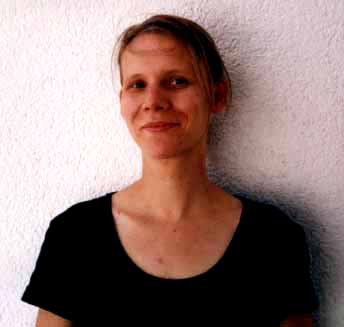
Annette Krebs studied music and concert guitar in Frankfurt/Main, and has lived in Berlin since 1993. She has worked intensively in the crossover area between improvisation and composition, exploring the possibilities of the prepared guitar with regard to sound, structure, noise, the mixing of materials, and space. Various preparation methods are used to produce noises and sounds, which are then enlarged through the use of sometimes high levels of amplification. The sound of the amplification and mixingboards, additional tapes, radios and objects are used as musical material. She works also in the field of electroacoustic composition, de- and reconstructing selected sound- and noisematerial. Fragments of noises, of words and sentences are used to remind, to suggest on certain meanings, fusing with the sounds to a surreal, abstract soundscape.
Collaborations with:
Chris Abrahams, Alessandro Bosetti, Burkhard Beins, Sandra Becker, Lucio Capece, Rhodri Davies, Jim Denley, Axel Dorner, Robin Hayward, Sven-Ake Johansson, Christoph Kurzmann, Sachiko M, Kaffe Matthews, Toshimaru Nakamura, Andrea Neumann, Bhob Rainey, Michael Renkel, Ana Maria Rodriguez, Keith Rowe (AMM), Ignatz Schick, Burkhard Stangl, Taku Sugimoto, Luca Venitucci, Marc Wastell, Otomo Yoshihide, ...

Version 2:
Guitarist Annette Krebs is a key member of a young group of Berlin musicians who emerged in the late 20th century with a new, radical, and influential musical aesthetic. This group of artists, sometimes called the Reductionist school, mix composition and improvisation to form a music for which silence is as potent as sound. Dynamics are important, and part of the aesthetic involves extremely quiet gestures that draw the listener in, focusing the ear on subtle detail. Juxtaposition is a key component, as the expected and the unexpected are deftly employed elements of composition. Krebs, a master of musical texture, may seem more like a sculptor than a guitar player. A classically trained performer, Krebs has radically reinvented the guitar to suit her music.
She lays the guitar—an amplified one—flat on a table and precisely carves out sonic shapes and colors from a variety of objects applied to the instrument. The result is fascinating. A window between action and sound is made clear. Process and composition are revealed. Through amplification, microscopic sound is enlarged, as with a magnifying glass, to become the material for music-making.
Find more videos like this on NetNewMusic
Video by Mona Breede
Sound by Annette Krebs
http://www.japanimprov.com/profiles/akrebs/
FOCUS ON:
Jason Kahn
percussion, analog synthesizer, computer(zürich)
On Tuesday Feb. 24th, Jason Kahn will play a duo piece with Austin percussionist Chris Cogburn, followed by an improvised collaboration with Zanzibar Snails’ Michael Chamy (electronics) and Nevada Hill (electric violin, electronics). This will be the second of the evening’s three sets of music.
http://jasonkahn.net/

Jason Kahn's work includes sound installation, performance and composition. He was born in New York in 1960, grew up in Los Angeles and relocated to Europe in 1990. He currently lives in Zürich.
He has given concerts and exhibited sound installations throughout Europe, North and South America, Japan, Mexico, Korea, Israel, Turkey, Russia, Lebanon, Egypt, Hong Kong, New Zealand and Australia.
He performs both solo and together with musicians like Dieb13, Steinbrüchel, Kim Cascone, John Hudak, Steve Roden, Günter Müller, Kevin Drumm and Toshimaru Nakamura, using percussion, analog synthesizer or computer in different combinations.
He composes for electronics, acoustic instruments and environmental recordings. For larger groups of directed improvisation he has devised a system of graphical scores. Kahn creates his sound installations for specific spaces. The focus of these primarily non-visual works lies in the perception of a space through sound.
In 1997 Kahn founded the independent label Cut, producing to date twenty-five CD's, both of Kahn's own work and other artists.
“Kahn's work bears some similarity with the late music of Morton Feldman. What Feldman and Kahn often manage to do is suggest that what you’re hearing when you’re listening to their compositions is a continuum: moment without time.”
- Brian Marley, The Wire
Jason Kahn with drummer Jon Mueller Sept. 30 in Charlottesville, VA
expanded bio
Jason Kahn began as a drummer in Los Angeles-based alternative rock and avant-rock bands in the mid-’80s. When he relocated to Berlin in 1990, he turned resolutely toward free improvisation and later to the micro-sound scene, incorporating electronics to his percussion work. He spent the 1990s between Germany and Japan, playing in Arnold Dreyblatt’s Orchestra of Excited Strings; with Toshimaru Nakamura as the duo Repeat; and collaborating on-stage and on record with improvisers like Günter Müller, Dieb13, Otomo Yoshihide, Evan Parker, Sainkho Namchylak, and Taku Sugimoto.
Born in New York City in 1960, Kahn grew up in Los Angeles, surrounded by the Californian music of the ’60s. Punk rock in the mid-’70s gave him the impetus to become a musician. After college studies in African history and music, he went to the University of London for a year and began to play drums. Back in L.A., he studied with session drummer Billy Moore.His interests included jazz and improvisation (hearing Ed Blackwell drum on Eric Dolphy’s album Live at the Five Spot was a revelation), but for a long time he played with rock bands.
The most important was the Universal Congress Of (featuring Saccharine Trust’s Joe Baiza), with whom he recorded three albums for SST and toured extensively in the U.S. and Europe. It is after such a tour, in February 1990, that he decided to quit and move to East Berlin, to experience the exhilaration of the city shortly after the end of the Communist regime. There he hooked up with the free improv crowd, performing with Dietmar Diesner, Johannes Bauer, and Ernst-Ludwig Petrowsky, while absorbing the burgeoning techno scene.
A friend put him in contact with Dreyblatt, and for five years Kahn participated in the activities of the Orchestra of Excited Strings. Meanwhile, he radically transformed his approach to drums, taking lessons in Arabic and Iranian music, and most importantly stripping down his technique to rediscover the sonic properties of his instrument. The results of his search began to be detectable in the recordings of Cut, his duo with guitarist Birger Löhl; but they really surfaced starting with Temporary Contemporary, the second album by his other duo Repeat, with Toshimaru Nakamura.
Started in 1997, this project attracted a little more attention, thanks to Nakamura’s unusual use of a “no-input mixing board.” In 1996, Kahn started the small independent label Cut, on which he released albums by Repeat and a string of solo recordings (Drums and Metals and Analogues, 1999; Plurabelle, 2001). By 2001, he had also begun to present sound installations and to perform as a solo laptop computer artist. He also curated Sonique Series, a series of experimental music concerts in Zürich, Switzerland.
Subscribe to:
Posts (Atom)
